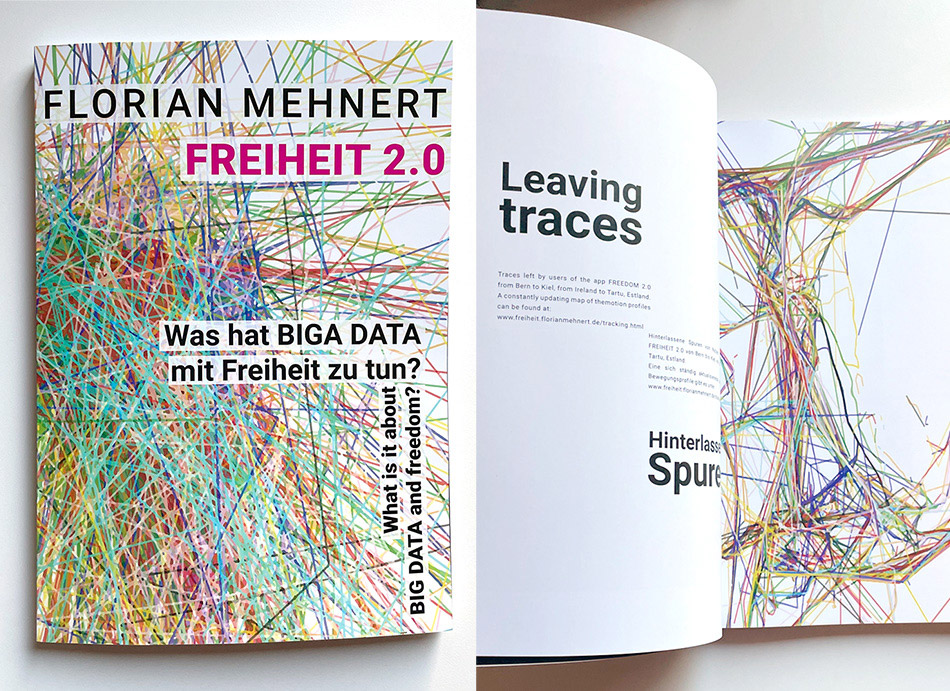
A social sculpture in public space that translates abstract Big Data processes into movement, lines, renamed places and public debate.
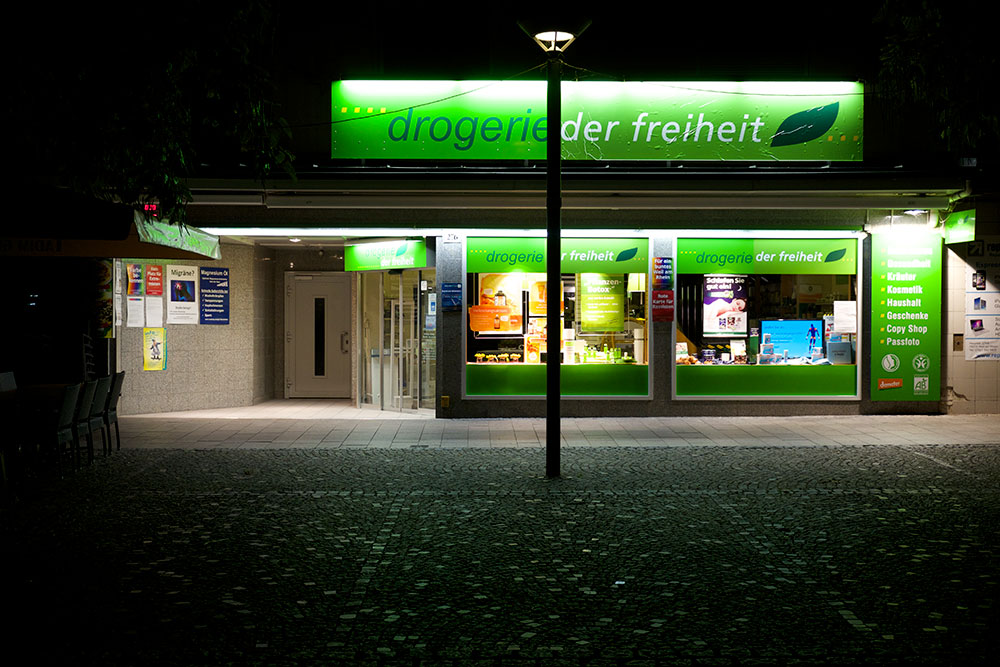
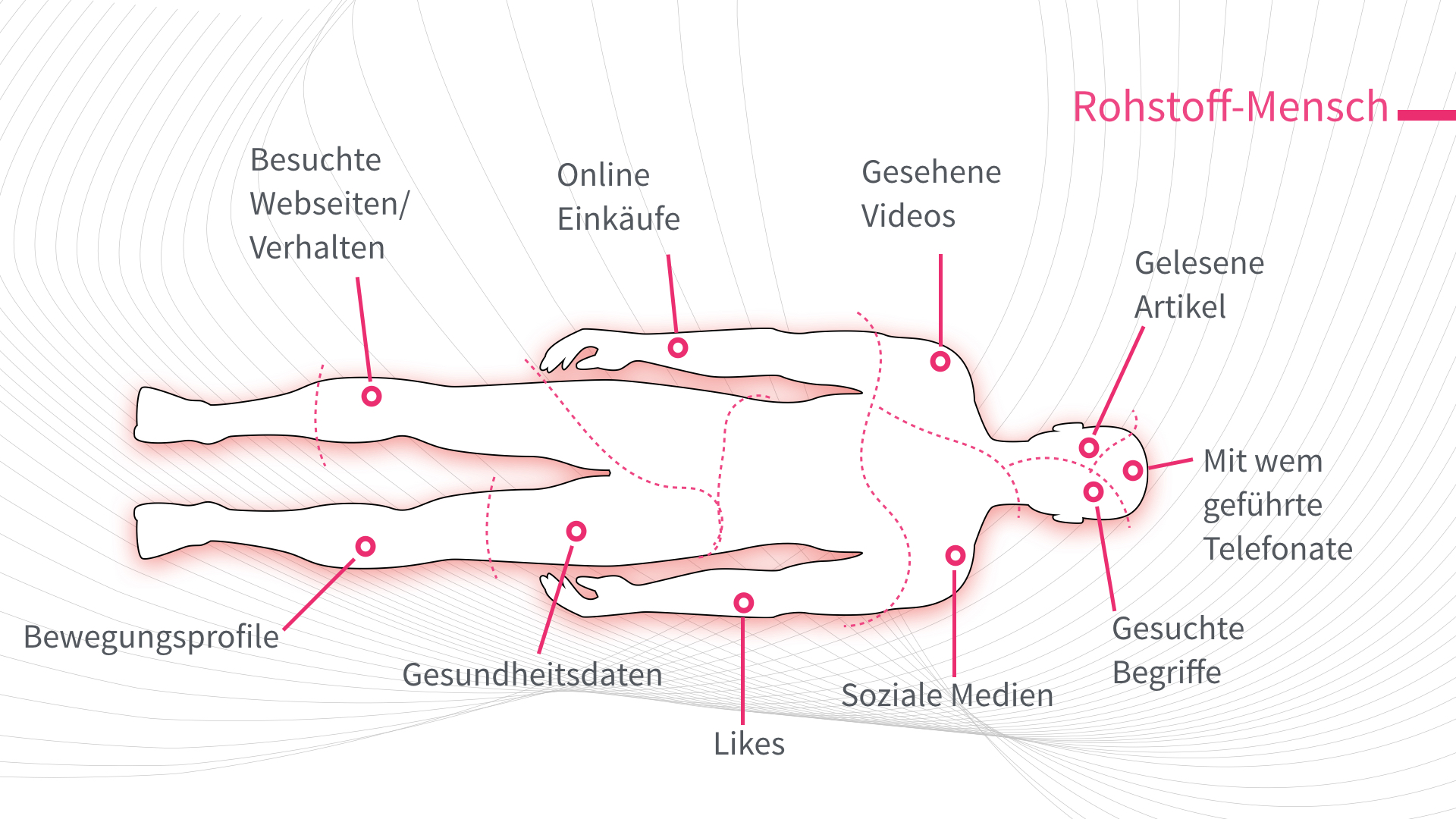
Freedom 2.0 was realized in 2016 in Weil am Rhein, Basel/Riehen and Huningue, and again in Stuttgart in 2018. The project asks what Big Data has to do with freedom and how digital data collection affects our analogue lives, our movements and our understanding of privacy.
The work consisted of four connected elements: a freely available self-tracking app with projections of movement profiles, the temporary renaming of participating shops, a colored guidance system in urban space and the BIG DATA colloquia. Passers-by, shop owners, app users and visitors became co-shaping parts of the installation.
The digital trace becomes visible in the city.
Freedom 2.0 connects individual movement, public signs, urban intervention and knowledge transfer. Each element works on its own; together they form a participatory social sculpture.
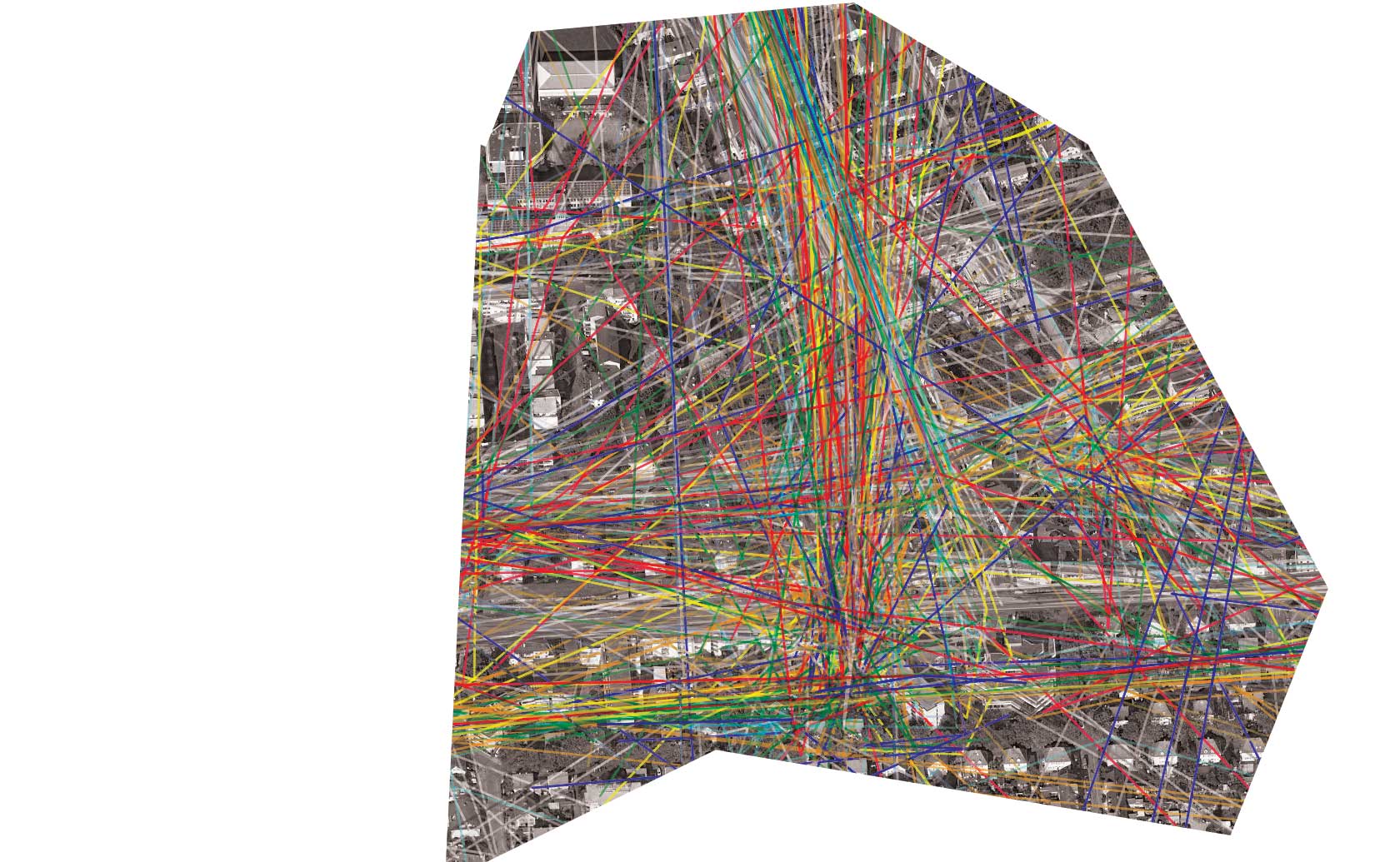
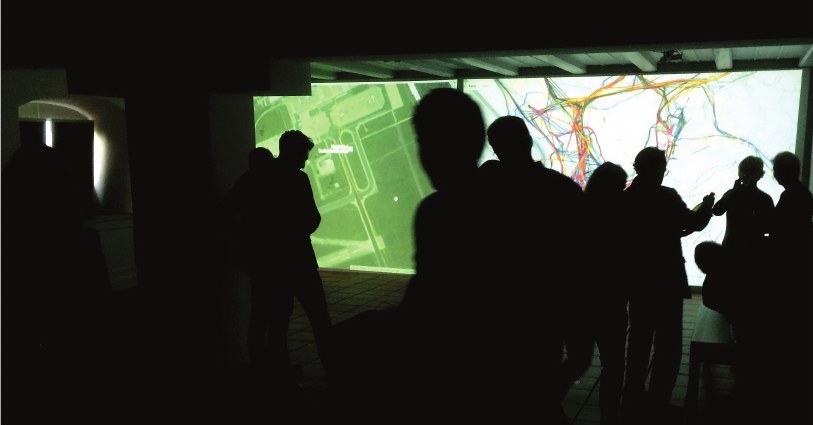
A freely available self-tracking app was developed for the project. It used the GPS function of the smartphone and regularly determined the geographic position of participants. The anonymized and encrypted data was sent to a project-specific server and condensed into movement profiles.
The projections made these profiles visible in the exhibition space. Each line represents the movement of a person and shows how everyday paths become usable data.
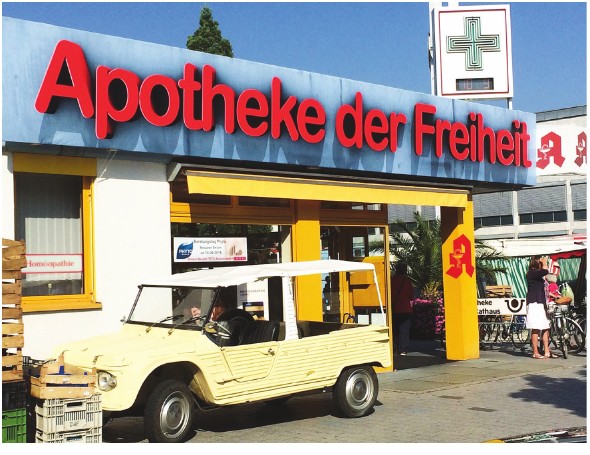
Participating shops were renamed for the duration of the project and redesigned in their own visual language. Existing names became places such as Drugstore of Freedom, Pharmacy of Freedom, Bookstore of Freedom or Newspaper of Freedom.
The change in urban space created a subtle disturbance. Anyone seeing the new signs was confronted with the question of why freedom needs to be publicly marked and how invisible its loss has become in digital everyday life.
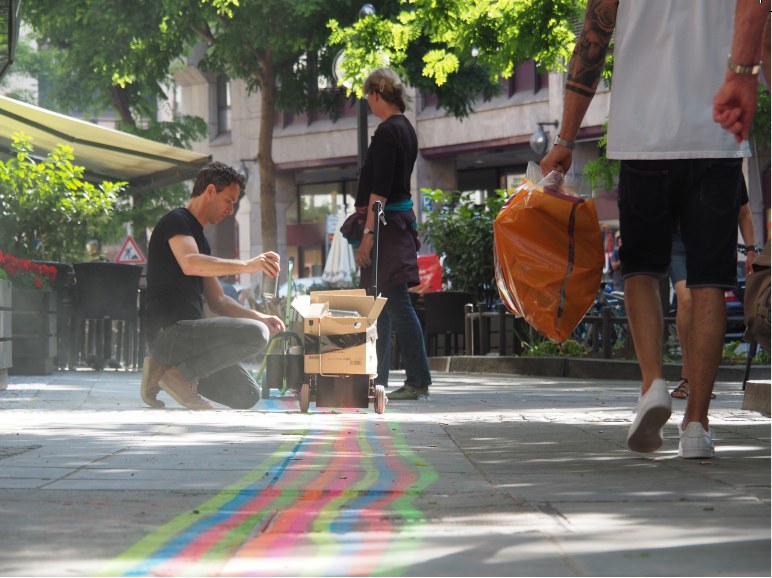
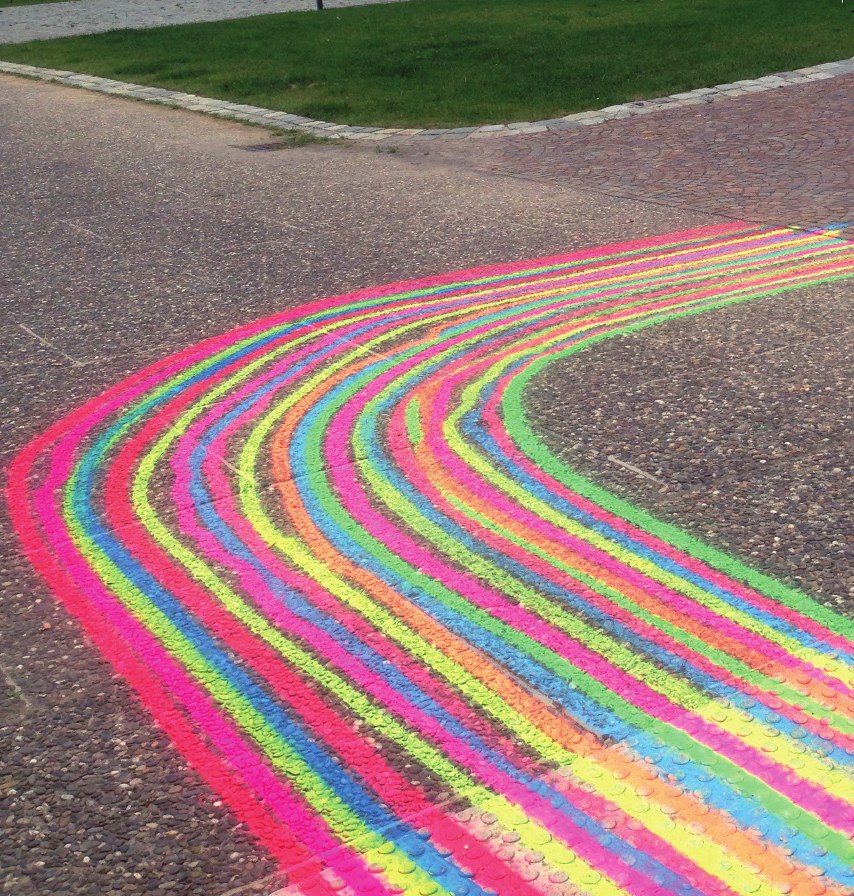
A temporary guidance system of colored lines led from the renamed shops across streets and sidewalks to the sites of the colloquia. It translated the digital movement profiles of the app into an analogue form in public space.
Applying the lines took several days and was partly carried out at night or early in the morning. The colored traces quickly became a topic of conversation and made the invisible data flow of the digital world physically perceptible.
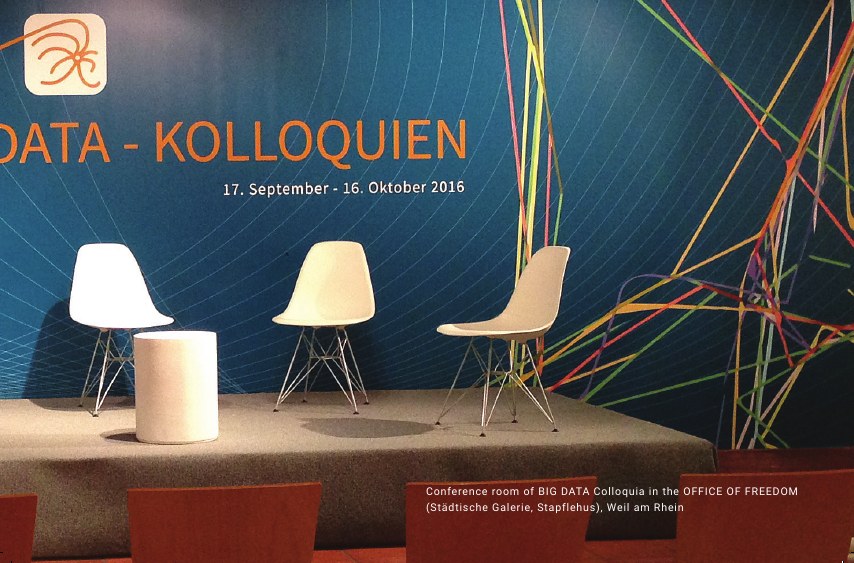
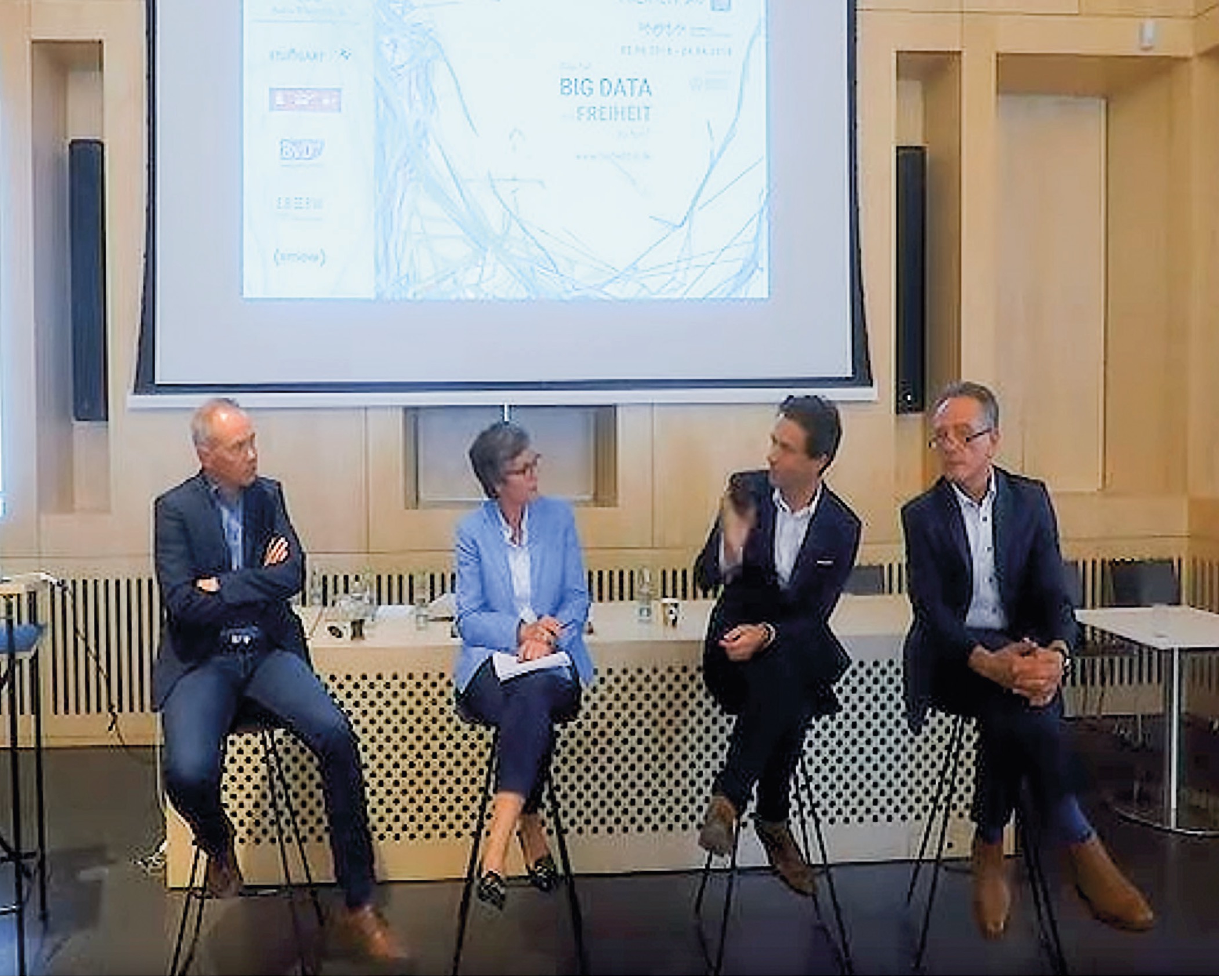
The BIG DATA colloquia questioned and discussed our understanding of freedom in the digital sphere with invited speakers from media theory, computer science, economics, law, psychology and philosophy.
Lectures and discussions formed an integral part of the installation. They connected artistic experience in urban space with knowledge exchange, dialogue and public reflection.
The comprehensive Freedom 2.0 publication expands the project with contextual and documentary material, many illustrations and contributions from lectures held during the project. It allows a deeper engagement with the artistic and social questions behind the work.